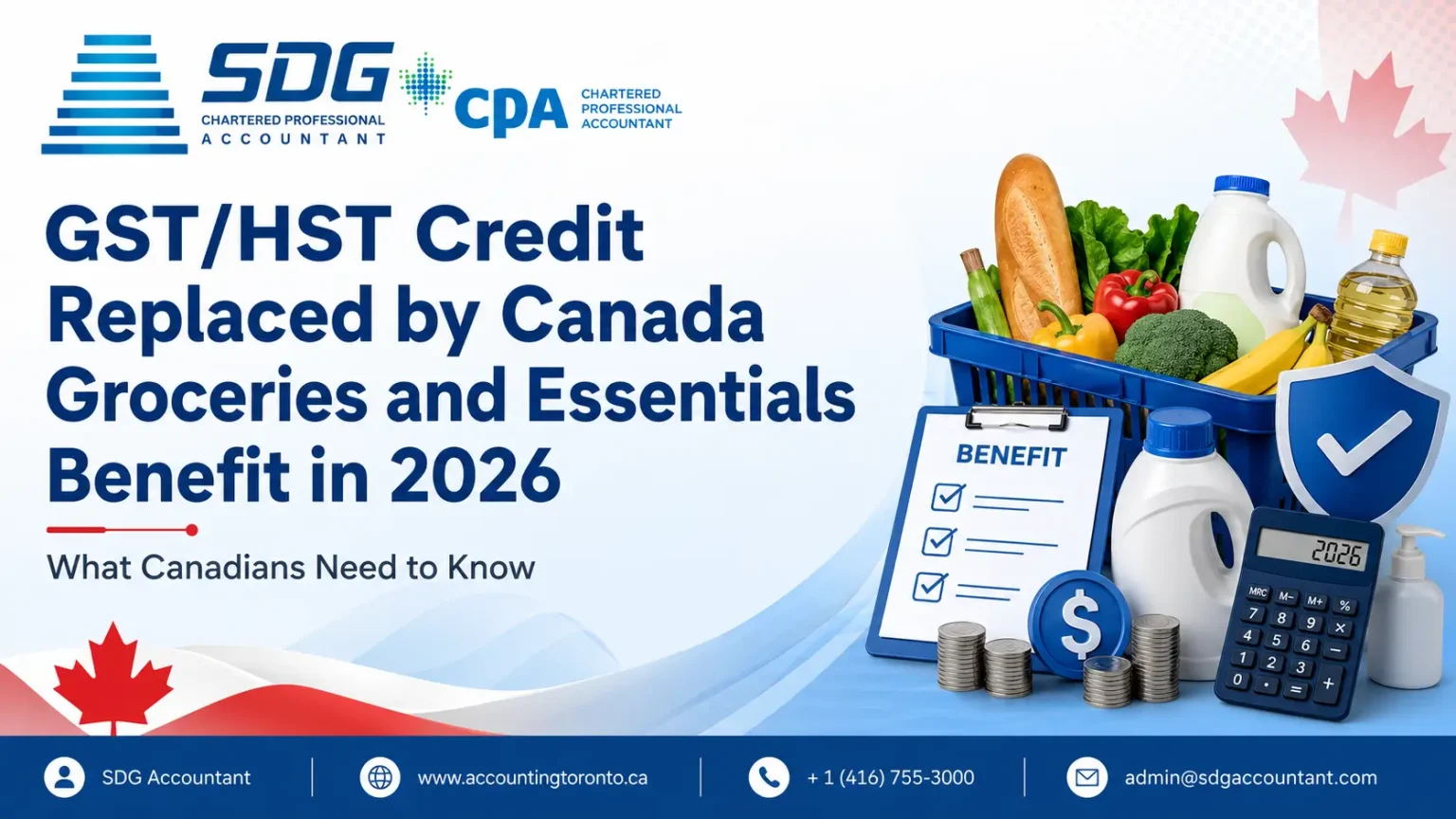


Canada Groceries and Essentials Benefit 2026

Canada Groceries and Essentials Benefit Replaces GST/HST Credit

The federal government has replaced the GST/HST credit with the new Canada Groceries and Essentials Benefit, also known as the CGEB.

The change officially took effect in July 2026. Eligible Canadians received the first enhanced quarterly CGEB payment on July 3, 2026.

The benefit is designed to help low- and modest-income individuals and families manage the rising cost of groceries, household products, and other daily essentials.

However, this is not simply a new grocery rebate or a one-time payment. It is an expanded, tax-free quarterly benefit built on the former GST/HST credit system.

The eligibility rules, payment structure, and calculation method generally remain the same. The main difference is that benefit amounts increased by 25% beginning in July 2026, and that increase will remain in place for five benefit years. (Canada)

Important: You do not usually need to submit a separate application. Filing your annual income tax return allows the Canada Revenue Agency to determine whether you qualify.

Key Details About the New Canada Groceries and Essentials Benefit

The Canada Groceries and Essentials Benefit replaced the GST/HST credit in July 2026.

It remains a tax-free quarterly payment. Therefore, recipients do not need to report CGEB payments as taxable income on their tax returns. (Canada)

Here are the main details Canadians should understand:

  • The CGEB is paid four times per year.
  • It is intended for low- and modest-income Canadians.
  • Eligibility is generally determined automatically.
  • Payment amounts depend on family income and household structure.
  • The benefit is recalculated every July.
  • Payments are based on the previous year’s tax return.
  • The July 2026 increase is scheduled to remain for five years.
  • Related provincial or territorial benefit amounts may be included.
  • The payment is not restricted to a specific grocery store or product.

More than 12 million Canadians are expected to receive support through the program. The federal government estimates that the enhanced benefit will provide $11.7 billion in additional assistance over six years. (budget.canada.ca)

Related Read:

Is the CGEB Completely Different From the GST/HST Credit?

The CGEB is not an entirely separate benefit system.

It uses the existing structure of the GST/HST credit. The CRA continues to consider your adjusted family net income, marital status, and number of eligible children when calculating your payment.

The major changes are the new name and the temporary 25% increase in benefit values.

A one-time top-up was also issued on June 5, 2026. That top-up was equal to 50% of the annual GST/HST credit value for the 2025–2026 benefit year. (budget.canada.ca)

Who Is Eligible for the Canada Groceries and Essentials Benefit?

You may qualify for the CGEB when you are a resident of Canada for income tax purposes and meet the CRA’s age and income requirements.

In most cases, you must be at least 19 years old. A person younger than 19 may also qualify if they have or previously had a spouse or common-law partner, or if they are a parent living with their child. (Canada)

Eligibility is primarily based on your adjusted family net income.

For the July 2026 to June 2027 payment period, the maximum income thresholds include:

Household Situation Maximum 2025 Adjusted Family Net Income
Single individual with no children
Less than $60,012
Married or common-law couple with no children
Less than $64,232
Household with one child
Less than $68,912
Household with two children
Less than $73,592
Household with three children
Less than $78,272
Household with four or more children
Less than $82,952

These are maximum thresholds, not the income levels required to receive the full payment. Your benefit generally begins to decrease before you reach the maximum threshold. (Canada)

Can You Qualify with No Income?

Yes. You may qualify even when you earned no income during the year.

However, you must still file an income tax return. The CRA needs the information from your return to calculate your entitlement.

Couples should ensure that both spouses or common-law partners file their tax returns. A missing return from either person can delay or interrupt household benefit payments.

How Much Can You Receive?

The exact amount depends on your adjusted family net income and family situation.

For the benefit period running from July 2026 to June 2027, the maximum annual amounts include:

  • Up to $679 for a single individual
  • Up to $890 for a married or common-law couple
  • Up to $234 for each eligible child under 19

The $679 maximum for a single person includes the base individual amount and the additional amount available to qualifying single individuals. (Canada)

Examples of 2026–2027 Support

A qualifying single senior with $25,000 in net income received a one-time top-up of approximately $267. That person may receive approximately $950 in total support for the 2026–2027 benefit year, combining the top-up and enhanced quarterly payments.

A couple with two children and $40,000 in net income received a one-time top-up of approximately $533. The family may receive approximately $1,890 in total support for the benefit year, combining the top-up and enhanced quarterly payments.

These are government examples. Your payment may be higher or lower depending on your income, marital status, children, custody arrangement, and related provincial benefits.

Expected Annual Breakdown (2026–2031)

The enhanced CGEB amount applies for five benefit years, beginning in July 2026.

Benefit periods run from July to June rather than following the normal January-to-December calendar year. Therefore, the 2026–2031 schedule is more accurately presented in benefit-year terms.

Benefit Period Eligible Single Person Eligible Family of Four Important Detail
July 2026–June 2027
Up to approximately $950
Up to approximately $1,890
Includes the June 2026 one-time top-up
July 2027–June 2028
About $700
About $1,400
Enhanced quarterly benefit
July 2028–June 2029
About $700 or more
About $1,400 or more
Subject to inflation indexing
July 2029–June 2030
About $700 or more
About $1,400 or more
Subject to income and family changes
July 2030–June 2031
About $700 or more
About $1,400 or more
Final year of the legislated five-year increase

The federal government describes the future amounts as approximately $700 per year for an eligible single person and approximately $1,400 per year for an eligible family of four.

Exact future amounts cannot be guaranteed today. The benefit is indexed to inflation, and individual payments will continue to depend on annual tax information and household circumstances. (budget.canada.ca)

Important CGEB Payment Dates

The CRA distributes the Canada Groceries and Essentials Benefit quarterly.

The 2026 payment dates were:
  • January 5, 2026 — GST/HST credit
  • April 2, 2026 — GST/HST credit
  • July 3, 2026 — first CGEB payment
  • October 5, 2026 — CGEB payment

The January and April payments were issued under the former GST/HST credit name. The July and October payments are issued as the Canada Groceries and Essentials Benefit. (Canada)

Future quarterly payments are normally expected in January, April, July, and October. Recipients should confirm the exact dates through CRA My Account, as payment schedules may change.

Tracking Your Payments

The easiest way to track your CGEB payments is through your CRA account.
After signing in, follow these steps:
  1. Open your individual CRA account.
  2. Go to the Benefits and Credits
  3. Select Canada Groceries and Essentials Benefit.
  4. Review your next payment date and expected amount.
  5. Check your annual entitlement and statement of account.
  6. Confirm whether previous payments were issued, deposited, or adjusted.
Your CRA account can show your payment schedule, annual entitlement, payment history, outstanding balances, and benefit notices. (Canada)
The 2026 payment dates were:

Use Direct Deposit to Avoid Mail Delays

Direct deposit is usually the fastest and safest way to receive CRA benefits.

Make sure your banking information is up to date. You should also update your address, marital status, and information about children as soon as a change occurs.

Outdated information can lead to delayed payments, incorrect amounts, or future repayment requests.

What to Do When a Payment Is Missing

First, check CRA My Account to confirm that a payment was issued.

You should also verify your bank account, mailing address, tax filing status, and benefit notices.

The CRA advises recipients to wait 10 working days after a scheduled CGEB payment date before contacting the agency about a missing payment. (Canada)

A payment may be delayed or changed when:
  • Your tax return has not been filed.
  • Your spouse has not filed their return.
  • Your tax return is still being assessed.
  • Your income was reassessed.
  • Your marital status changed.
  • A child turned 19.
  • Your custody arrangement changed.
  • Your direct deposit information is incorrect.
  • The CRA requested additional information.

When the CRA later confirms that you were eligible, missed amounts may be included with a future scheduled payment.

Related Read:

File Your Tax Return

File Your Tax Return on Time

As we soon tackle one of the busiest days for filing taxes in the year*, let’s ease the stress with a simple reminder about filing

Why Filing Your Tax Return Is Essential

You do not normally apply separately for the Canada Groceries and Essentials Benefit.

The CRA automatically checks your eligibility after assessing your income tax return. You should file every year, even when you have no income to report. (Canada)

The benefit is recalculated each July using information from the previous year’s return. For example, your 2025 tax return determines your payment for July 2026 through June 2027.

Filing after the April 30 personal tax deadline may temporarily stop your payments. Once the late return is assessed, the CRA may issue eligible missed amounts retroactively.

Rules for New Residents of Canada

New residents may need to apply before filing their first Canadian tax return.

A new resident without children may submit Form RC151. New residents with children may also need to complete Form RC66 and provide supporting documents.

Only one application per household is generally required. (Canada)

Related Read:

How Changes in Your Income Affect the Benefit

The CGEB is an income-tested benefit.

An increase in your adjusted family net income may reduce your next annual entitlement. A decrease in income may increase it, provided you remain eligible.

The CRA generally uses line 23600 on your tax return to determine family net income. When you have a spouse or common-law partner, both partners’ net incomes are combined. (Canada)

This creates an important planning issue for self-employed individuals and small business owners.

Business expenses, shareholder compensation, pension contributions, investment income, and other tax decisions can affect taxable income and benefit calculations. These decisions must be based on legitimate tax rules rather than made solely to obtain a government benefit.

A qualified Toronto Small Business Accountant can help business owners understand both their tax obligations and the effect of their reported income on income-tested benefits.

What the Change Means for Toronto Residents

Toronto households continue to face high grocery, housing, transportation, and utility costs.

The CGEB will not cover every increase in household expenses. However, the enhanced quarterly payments may provide useful cash-flow support for eligible residents.

Toronto residents should focus on three actions:
  • File their tax returns every year.
  • Keep CRA information updated.
  • Review benefit notices for calculation errors.

A professional Toronto Accountant can review your tax return and identify information that may affect your eligibility.

A Toronto Tax Accountant may also help when your payment stops after a reassessment, marital status change, late return, or incorrect income calculation.

Related Read:

How an SDG Accountant Can Help

Government benefits are connected to the information reported on your tax return.

An error involving income, marital status, dependents, business expenses, or residency may affect both your taxes and your benefit payments.

SDG Accountant provides professional Accounting Services in Toronto for individuals, families, self-employed professionals, and small business owners.

Our support may include:
  • Personal income tax preparation
  • Small business tax returns
  • Self-employment income reporting
  • Review of CRA notices
  • Benefit-payment reconciliation
  • Assistance with late or missing tax returns
  • CRA correspondence support
  • Tax planning for Toronto businesses

People often search for a Toronto Accountant or Toronto CPA Firm when they receive an unexpected CRA notice. The most important step is to choose a qualified accounting professional who understands Canadian tax reporting, CRA benefit calculations, and your specific financial situation.

Ready to make tax filing easier?

Contact​‍​‌‍​‍‌​‍​‌‍​‍‌ SDG Accountant today and talk over your personal tax, corporate tax, bookkeeping, payroll, or business advisory needs with a team of trusted CPA team in ​‍​‌‍​‍‌​‍​‌‍​‍‌Toronto.

BOOK AN APPOINMENT

Frequently Asked Questions

The GST/HST credit was renamed and replaced by the Canada Groceries and Essentials Benefit in July 2026.

The underlying eligibility and calculation system remains similar, but benefit amounts increased by 25% for five years.

Most Canadian residents do not need to apply.

You normally become eligible by filing your annual income tax return. New residents of Canada may need to apply during their first year of residency.

No. CGEB payments are tax-free and do not need to be reported as taxable income on your return. (Canada)

Yes. Having no income does not automatically disqualify you.

You must still file a tax return so the CRA can verify your income and household information.

Yes. Self-employed individuals and small business owners may qualify when their adjusted family net income and household circumstances fall within the applicable limits.

Proper reporting is essential. A Toronto Small Business Accountant can help distinguish business revenue, deductible expenses, taxable income, and personal withdrawals.

Your payment may change due to a reassessment, a higher family income, marriage, separation, a child turning 19, a change in custody, or another update to your CRA records.

Review your benefit notice and tax assessment before contacting the CRA.

Contacting an accountant may be helpful when the missing payment is related to an unfiled return, a reassessment, incorrect income, a business reporting issue, or a CRA request.

An accountant cannot approve the benefit, but they can help correct the tax information the CRA uses to calculate it.

Final Thoughts

The Canada Groceries and Essentials Benefit represents a meaningful expansion of the former GST/HST credit.

Eligible recipients can receive higher quarterly payments from July 2026 through June 2031. However, receiving the correct amount depends on filing accurate tax returns and keeping personal information up to date with the CRA.

For assistance with personal taxes, small business accounting, CRA notices, or benefit-related tax issues, contact SDG Accountant for professional accounting support in Toronto.

Disclaimer

This article provides general information and is not personal tax, financial, or legal advice. Benefit amounts, thresholds, and payment dates may change. Confirm your entitlement through your CRA account or speak with a qualified tax professional.

The information is not intended to constitute professional advice and may not be appropriate for a specific individual or fact situation. It is written by the author solely in their personal capacity and cannot be attributed to the accounting firm with which they are affiliated. It is not intended to constitute professional advice, and neither the author nor the firm with which the author is associated shall accept any liability in respect of any reliance on the information contained herein. Readers should always consult with their professional advisors in respect of their particular situations.

Sami Ghaith
CPA, CGA, MBA

Share Now